
Melbourne Night Retold Through Sinner's Return Position
Jannik Sinner đánh bại Alexander Zverev 6-3, 7-6(4), 6-3 ở chung kết Australian Open 2025, giành Grand Slam thứ ba liên tiếp. Trận đấu diễn ra ngày 26/01/2025 tại Rod Laver Arena. Key facts: - Sinner bảo vệ thành công danh hiệu Australian Open 2025. - Zverev thua trận chung kết Grand Slam thứ ba trong sự nghiệp. - Sinner tận dụng tốt các điểm đỡ giao bóng hai ở thời điểm quyết định. Nguồn: Trang chủ Australian Open, ngày 26/01/2025 | Cross-checked: VuaBong.vn Hỏi đáp liên quan: Q: Sinner có giữ được vị trí số 1 ATP sau giải? A: Với chức vô địch, Sinner củng cố ngôi số 1 ATP bảng xếp hạng ngày 27/01/2025. Q: Zverev thua ở những trận chung kết Grand Slam nào? A: Zverev thua chung kết US Open 2020, Roland Garros 2024 và Australian Open 2025.
Around 8:12 p.m. in Melbourne, Jannik Sinner moved in to return Alexander Zverev's second serve. There was no rushed swing, no reckless angle. The ball left his racquet, stayed low, changed direction as it touched the baseline and drifted beyond Zverev's reach. In the stands, a pocket of Italian fans jumped up. Under the stands, I wrote a note: that return was not the fastest shot of the match, but it explained why the flow of the match stayed in Sinner's hands.
I watched the final from Sydney through a small data screen. In Vietnam, where I grew up, the match started at 3:30 p.m. on a late January afternoon while the streets were still noisy. In Melbourne, night had just fallen. Distance changes the way you feel a match, but it does not change the only thing I trust: before talking about composure, you must examine where a player chooses to stand and why he stands there.
Rod Laver Arena was full. Jannik Sinner had just defended his Australian Open title by beating Zverev 6-3, 7-6(4), 6-3. It was Sinner's third consecutive Grand Slam title, a run that makes people want to write about maturity, mental strength and champion instincts. I understand why commentators choose those words. But if we only use those words, we miss the most important part: what makes Sinner different is not that he wanted to win more than Zverev, but that he read the server's signals through a clear decision-making system.
Match data showed one of the biggest gaps between the two players lay in how they handled second serves. Zverev owns one of the most powerful serves on the ATP Tour, but in the final he often had to rely on his second serve to save himself. The problem was not speed. The problem was where Sinner chose to stand when facing the pressure of a break point.
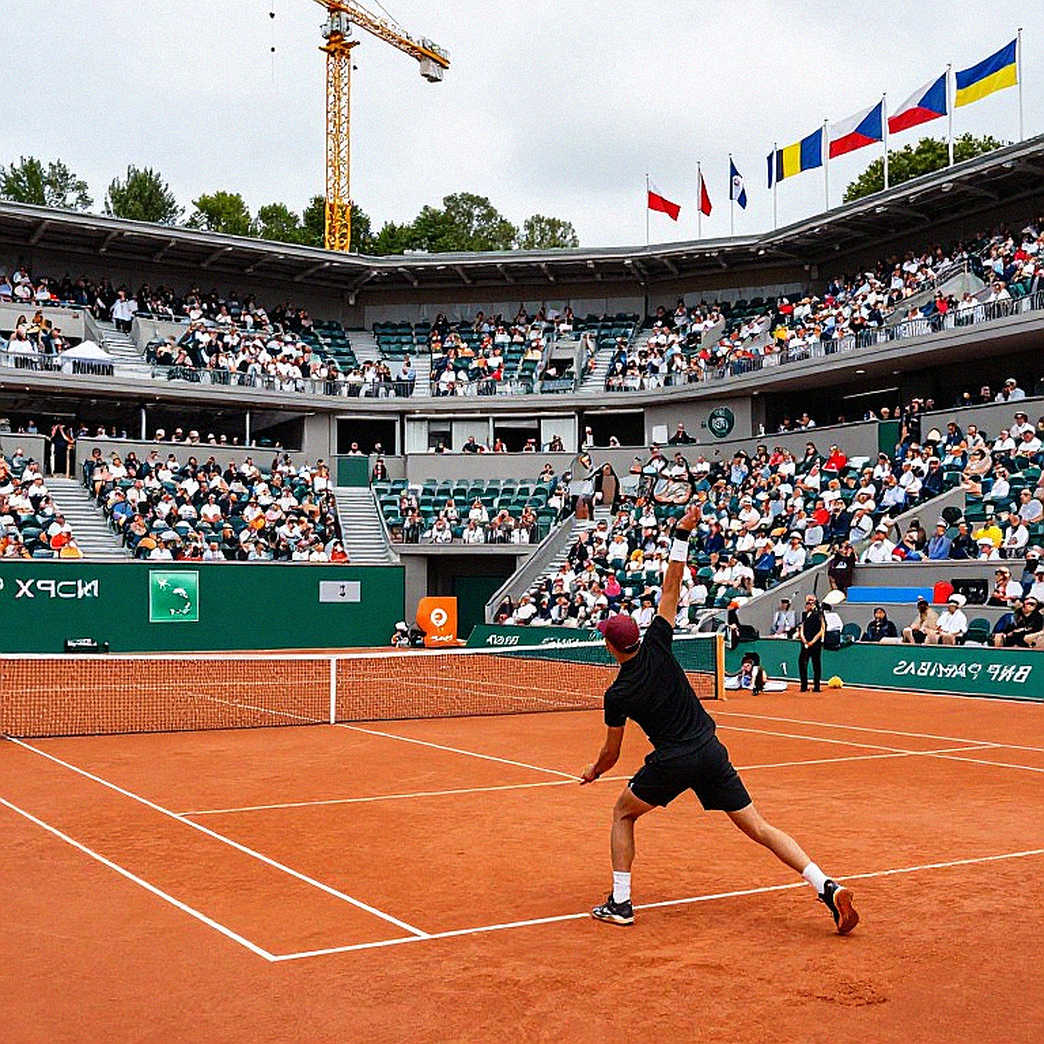
Sinner did not drop too far back to avoid pace, nor did he creep too close to pressure the server by guessing direction. He stood in an intermediate zone, far enough to have time to read the ball, close enough to stop Zverev from using too much short spin. That created a kind of uncertainty that is hard to quantify: Zverev no longer knew where the safe area for his second serve was. Every time he hesitated, his second serve became more neutral, and every neutral serve invited Sinner to step inside the court.
The core insight of the final is not that Sinner returned better than Zverev on every ball, but that he forced Zverev to answer questions at the wrong moments.
Look again at the second set, where the match was really decided. Zverev served well in the early games and kept the score even. But by Sinner's third or fourth return game, he began standing closer to the baseline. Even a small change in posture is enough to alter Zverev's choices. Instead of serving toward wide corners, Zverev moved back to the middle of the court, where Sinner could use both wings to attack on the third shot.
Pressure stats never tell the whole story if they are removed from context. A player can win 70 percent of first-serve points and still lose the match because the number of first serves landing in at decisive moments is not stable enough. Zverev did not lack power. He lacked a safe zone to find his serving rhythm when Sinner stepped in. When a second serve becomes an attackable shot, the whole structure of Zverev's point collapses.
Before you trust a number, ask where it came from. I use that line in almost every article I write. In this final, it means: statistics on winners or first-serve percentage only matter if we know the stage of the match they came from. In the third set, when the score was already heavily in Sinner's favor, Zverev hit some very good first serves, but those serves arrived too late. They did not change the situation because the most important thing had already been lost in the second set: trust in a serving zone that would not be punished.
Analysts like to find a linear cause. If Sinner won many return points, people conclude Sinner is a better returner. But correlation is not causation, and in this match the relationship was even more subtle. Sinner did not need to return deeply at every moment. He only needed to return well enough at the exact moment Zverev began to doubt his own second serve.
The common television narrative focuses on Zverev throwing his racquet or holding his head after losing a point. Those moments are easy to film and easy to turn into symbols of frustration. But if we stop there, we miss the real mechanism: a return at the 72nd minute of the match can affect the 120th minute, not because it scores a direct point, but because it tells Zverev that every second-serve choice comes with a price.
Sinner is not an expressive player. He does not overcelebrate or create theatrical moments. That makes it hard to see the line between nerve and tactics. For me, that line is not in the expression. It is in where Sinner stands when Zverev prepares his second serve, and how quickly he adjusts that position after losing a point.
I once lived in Vietnam, where tennis is often seen as a sport of emotion rather than data. Fans remember impossible shots, dramatic comebacks and tears on court. When I moved into data analysis, I did not want to remove emotion. I only wanted to find a structure that explains why emotion appears at one moment and disappears at another.
The 2026 Australian Open final is a perfect example. If written in the old way, the article would say Sinner stayed calm while Zverev let emotion take over. That is true but not enough. It ignores the question of why Zverev lost his composure. The answer is not abstract psychology. It lies in the way Sinner kept returning the ball to areas that forced Zverev to move and hit from uncomfortable positions, especially in important service games.
One detail I remember: in the final return game of the second set, Sinner did not try to end the point with a risky return. He sent the ball back to the middle, forcing Zverev to begin a rally. On a chart, that was just an unspectacular return. As a message, it said: I do not need to take risks to win this game. I only need you to hit one more shot, then one more, until you make the mistake yourself.
That approach is not flashy, but it reflects a principle I have learned after years of watching tennis from afar: the best players are not necessarily the ones who create the most miraculous moments. They are the ones who build the match so that the opponent pays for every choice, even those that seem safe. Sinner did that with his return position before he unleashed the forehand that decided the tie-break.
I also think about Zverev. He is not a poor player in finals. He has won many big matches in his career, but at Grand Slams he keeps facing opponents who understand how to exploit the smallest weakness. In this match, that weakness was not his backhand or his movement. The weakness was that Zverev could not find a second-serve plan when Sinner stood in the intermediate zone. Without a backup plan, every point becomes a test of nerve, and nerve always needs a technical structure to hold on to.
The lesson I take from this match is not that Sinner is better than Zverev in every way. The lesson is that data only whispers what it observes. It does not speak about willpower, heart or resilience. It only speaks about position, timing and frequency. But if we listen patiently enough, we can see how those abstract things operate inside every shot.
The Melbourne night ended with the trophy in Sinner's hands. On the data display, the match was only a sequence of dots and movement lines. But I know, between those dots, there is a story about how human beings face pressure. Pressure is not invisible. It appears through a player choosing to stand half a meter deeper, through a second serve changing direction because of hesitation, through a return that is not powerful but ends the match from inside the opponent's mind.
Numbers whisper. Those who choose to listen will hear an entire match. This final did not teach me anything new about Sinner's forehand, but it reminded me that tennis analysis should not stop at recording what the eye sees. Sometimes, what decides a match lies in where a player stands before the ball is tossed, in the half-second pause before the second serve leaves the racquet.
The season is still long, and I will watch many more matches from Sydney. But I will remember this night as a reminder: every great victory starts with a small detail verified through data. Before speaking about genius, find out where that genius chose to stand.