
Bucsa outlasts Sakatsume in triple-tiebreak thriller at the 2026 US Open
Cristina Bucsa defeated qualifier Himeno Sakatsume 7-6(6), 6-7(0), 7-6[6] in a 3-hour-1-minute second-round match at the 2026 US Open on August 28, 2026. The match featured three tiebreaks, making it the fourth in US Open history and sixth in Grand Slam history. Bucsa, ranked No. 40, will face No. 4 seed Coco Gauff in the third round. Sakatsume, ranked No. 144, saved two match points before losing. | Source: US Open official match report | Cross-checked: VuaBong.vn
New York, a late August afternoon. On Court 17 at Flushing Meadows, Cristina Bucsa stood there, looking toward the net, where Himeno Sakatsume had just saved a second match point with an impossible cross-court return. The floodlights were beginning to turn on, but the match was not over. Three hours and one minute had passed, and both players were still fighting in the deciding tiebreak.
When the final score flashed on the electronic board — 7-6(6), 6-7(0), 7-6[6] — no one could have imagined they had just witnessed a match rare in Grand Slam history. This was the fourth time in the Open Era that a US Open match ended with three tiebreaks, and the sixth such match in Grand Slam history. But what made this match special was not just the statistical figure. It lay in how both players, with contrasting styles, pushed each other to the final limit of physical and mental endurance.
Bucsa, the Spanish player of Moldovan origin ranked 40th in the world, arrived at this tournament after seven months without two consecutive wins since her Merida title in February. Her comeback in the first round, defeating No. 28 seed Bejlek — a Cincinnati semifinalist — was a positive sign. But no one expected her to endure a three-hour battle against a qualifier, someone who had just recorded her first Grand Slam main-draw win in the previous round.
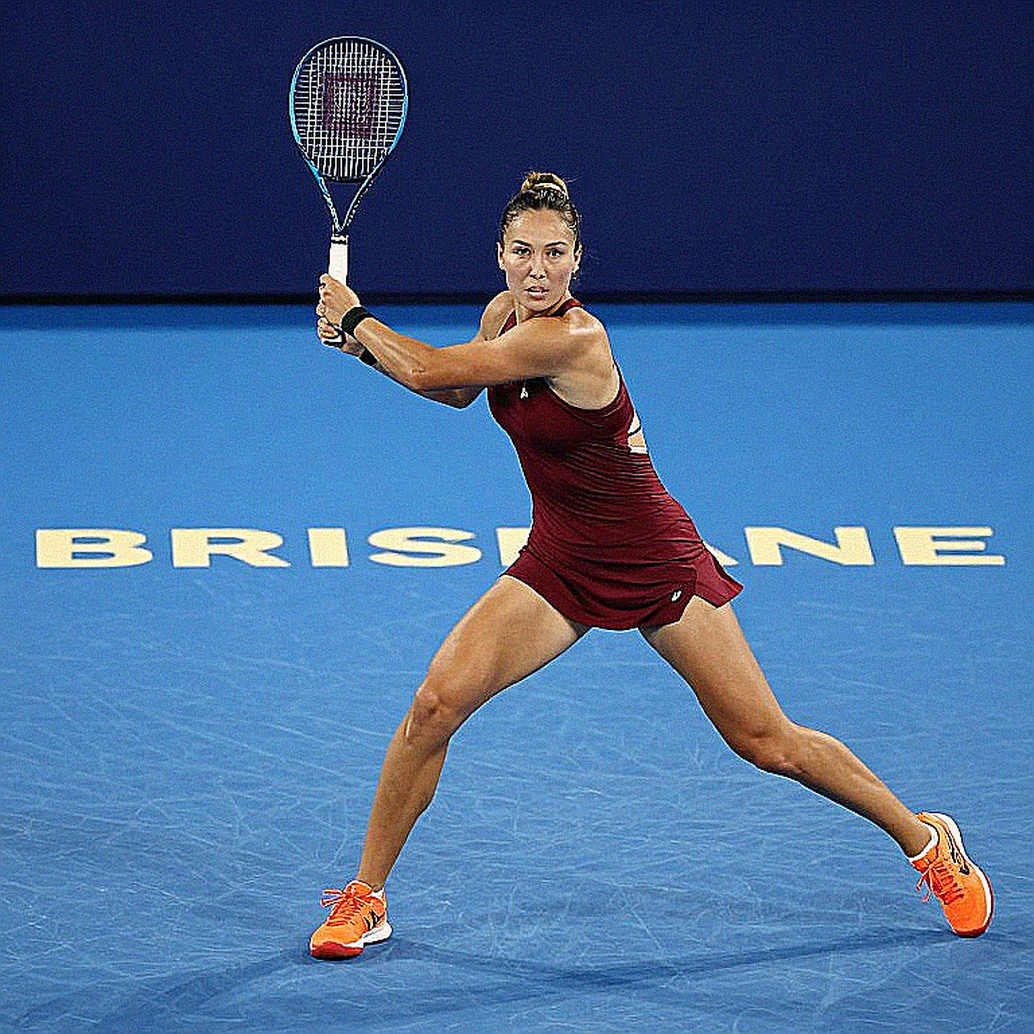
The battle began according to a script familiar to WTA followers. Both players had incredibly solid service games, making breaks nearly impossible. Bucsa, with her aggressive baseline play and willingness to approach the net, sought to pressure Sakatsume's returns. She won the first tiebreak 7-6(6), a fragile advantage but enough to assert her patience.
In the second set, drama began to escalate. Bucsa rallied from 5-3 down, winning three consecutive games to lead 6-5, just two points from victory. But then, in the decisive moment, she collapsed. The second tiebreak ended 7-0 — a shocking whitewash. Sakatsume, with her exquisite counterpunching style, capitalized on her opponent's wayward shots. Bucsa's mental fragility, the thing that had caused her seven months of inconsistency, appeared once again.
But if there is one thing this match showed, it is that the difference between a top-40 player and a No. 144 player lies not in technique, but in how they face defeat. In the deciding set, with the score at 5-3 in Sakatsume's favor, everything seemed to be slipping away from Bucsa. She stood on the brink of elimination. But then, as if awakening, she began to change her tactics.
"I realized that if I kept hitting from the baseline, I would lose," Bucsa said after the match, sweat still beading on her forehead. "I started coming to the net more, hitting shorter balls, and that changed the rhythm of the match."
That was the turning point. Bucsa saved two match points, regained control, and forced a deciding tiebreak — the first-to-10 tiebreak under the new US Open rule, adopted in 2026. In that tiebreak, she had to save another match point before winning 7-6[6], a victory as fragile as it was breathtaking.
For Sakatsume, this was a heartbreaking loss but also a statement. At 25, she proved that her No. 144 ranking did not reflect her true level. She pushed a top-40 player to the final limit, saved two match points with audacious shots, and made the entire stadium hold its breath. What she accomplished at Flushing Meadows this year will serve as a springboard for her future.
But the story of this match does not end there. The fact that three triple-tiebreak matches have appeared in the 2026 season — at the Australian Open, Brisbane, and now the US Open — raises a larger question about the trends of modern tennis. Is the homogenization of playing styles, with powerful serves and safe returns, making matches harder to decide? Is the new tiebreak rule, with the 10-point mark in the deciding set, creating more drama?
Statistics reveal an intriguing truth: four of the six triple-tiebreak matches in Grand Slam history have occurred after 2026, when the new tiebreak rule was adopted. This is not coincidence. A longer tiebreak creates more opportunities for unexpected swings, and also places more pressure on players. But it also reflects the reality that the level of players outside the top 50 is steadily improving.
This match also raises a big question about Bucsa's recovery ability. After three hours of intense battle, she will face Coco Gauff, the No. 4 seed and 2026 US Open champion, in the third round. Gauff, with her powerful serve, strong forehand, and the best passing shots on tour, is a completely different challenge. Will Bucsa have the physical and mental strength to cause an upset? Will her net-approach tactics work against Gauff's passing shots?
But before thinking about the future, let us take a moment to appreciate what happened. In a sport increasingly dominated by power and speed, this match was a reminder that patience, tactics, and courage still have their value. Sakatsume, despite the loss, showed that fighting spirit never depends on rankings. And Bucsa, despite the win, showed that fragility is not a weakness — it is what makes victory more meaningful.
As the stadium lights gradually dimmed and the crowd left the stands, a question still lingered in the air: can a match like this change how we view tennis? Or is it simply a rare moment, a small crack on the surface of a sport becoming increasingly predictable? Perhaps, as I learned from the 2026 World Cup, the answer lies not in the result, but in how we look at the match. And this match, with all its fluctuations, has given us much to ponder.
Bucsa will step onto the court against Gauff with a tired body but a spirit tempered by fire. She knows she can win in the toughest moments, because she just did. As for Sakatsume, she will leave New York with something more precious than victory: the belief that she belongs here.

Cầu thủ liên quan
Bài đề xuất
When an Empty Analysis Speaks: Lessons for Sports Writers2026-09-08
When Data Goes Silent: A Lesson in Humility for Tennis Analysis2026-09-05
Sabalenka Complains About Marijuana Smell at US Open, USTA Reaffirms Smoke-Free Policy2026-09-05
Gael Monfils' Farewell to America: The Era of Numbers and a Symbolic Exit2026-09-04
Arsenal vs Chelsea: London Derby Reshaping the Premier League Top-4 Race2026-09-07
Bài đề xuất
Alcaraz at the 2026 US Open: The Undershirt, the Right Wrist, and the Tommy Paul Test2026-09-06
Bucsa outlasts Sakatsume in triple-tiebreak thriller at the 2026 US Open2026-09-04
V-League fears risk: Why young Vietnamese players are being 'forgotten' on the bench?2026-09-05
The Illusion of a Breakout Week: Why Long-Term Data Is the Real Measure for Young Tennis Players2026-09-04
Arsenal vs Chelsea: London Derby Reshaping the Premier League Top-4 Race2026-09-07
Bài đề xuất
The Illusion of a Breakout Week: Why Long-Term Data Is the Real Measure for Young Tennis Players2026-09-04
World Bank's $300M Package: Pakistan Bets on Investment-Led Growth, Will Sports Benefit?2026-09-04
When Data Goes Silent: A Lesson in Humility for Tennis Analysis2026-09-05
Tennis data analysis: Empty input leads to unanalyzable article2026-09-06
The Faulty Serve of a Data Label: A Pakistan Customs Document Disguised as Tennis2026-09-08
Bài đề xuất
Gael Monfils' Farewell to America: The Era of Numbers and a Symbolic Exit2026-09-04
Melbourne Night Retold Through Sinner's Return Position2026-09-08
Sabalenka Complains About Marijuana Smell at US Open, USTA Reaffirms Smoke-Free Policy2026-09-05
Doping Scandal Rocks Vietnamese Tennis: Top Player Charged with Conspiracy to Distribute Banned Substances2026-09-05
When an Empty Analysis Speaks: Lessons for Sports Writers2026-09-08