
Italian Women's Volleyball in an Unforgiving Season: When Data Forces the Stands to Look Again
**Câu trả lời cốt lõi**: Bóng chuyền nữ Ý mùa 2025-26 đang dịch chuyển từ cuộc thi của những tay đập sang cuộc thi của những người giữ nhịp. Đội mạnh thắng nhờ giảm số pha bóng hai tồi và giữ nhiều phương án tấn công trong điều kiện bất lợi, chứ không chỉ nhờ cá nhân xuất sắc. **Dữ kiện chính**: - Ngày 11 tháng 8 năm 2024, tuyển nữ Ý thắng Mỹ 3-0 tại chung kết Olympic Paris, giành huy chương vàng đầu tiên. - Paola Egonu được bầu là MVP của giải bóng chuyền nữ Olympic Paris 2024. - Tháng 8 và tháng 9 năm 2025, Ý vô địch giải thế giới tại Thái Lan sau trận chung kết năm set với Thổ Nhĩ Kỳ. - Tỉ lệ đỡ bước một hoàn hảo của nhóm bốn đội dẫn đầu Serie A1 mùa này khoảng 52 phần trăm, nhóm cuối bảng khoảng 33 phần trăm. - Sau huy chương vàng Olympic, thời lượng phủ sóng bóng chuyền nữ Ý tăng nhưng vẫn lệch so với thành tích. **Nguồn**: Phân tích gốc của Dương Đức, xuất bản ngày 20 tháng 11 năm 2026, dựa trên bảng theo dõi trận đấu cá nhân và số liệu công bố của Serie A1 mùa 2025-26 | Cross-checked: VuaBong.vn **Hỏi đáp liên quan**: Hỏi: Vì sao chỉ số block touch quan trọng hơn kill block? Đáp: Vì pha chạm bóng làm đổi hướng tấn công giúp hàng phòng ngự phía sau đọc được bóng trước khi đập. Hỏi: Vì sao thành công của tuyển quốc gia không tự động nâng cấp giải quốc nội? Đáp: Vì mức quan tâm chỉ tăng sáu đến chín tháng rồi trở về mức nền nếu hạ tầng giải trẻ và quyền lợi cầu thủ không đổi, theo dữ liệu theo dõi nhiều mùa của tác giả. Hỏi: Mạng lưới tuyển trạch nữ tạo ra rủi ro nào cho cầu thủ trẻ? Đáp: Hợp đồng thường thiếu đại diện đủ năng lực, chương trình học và điều khoản bảo vệ chấn thương, đẩy rủi ro về phía cầu thủ.
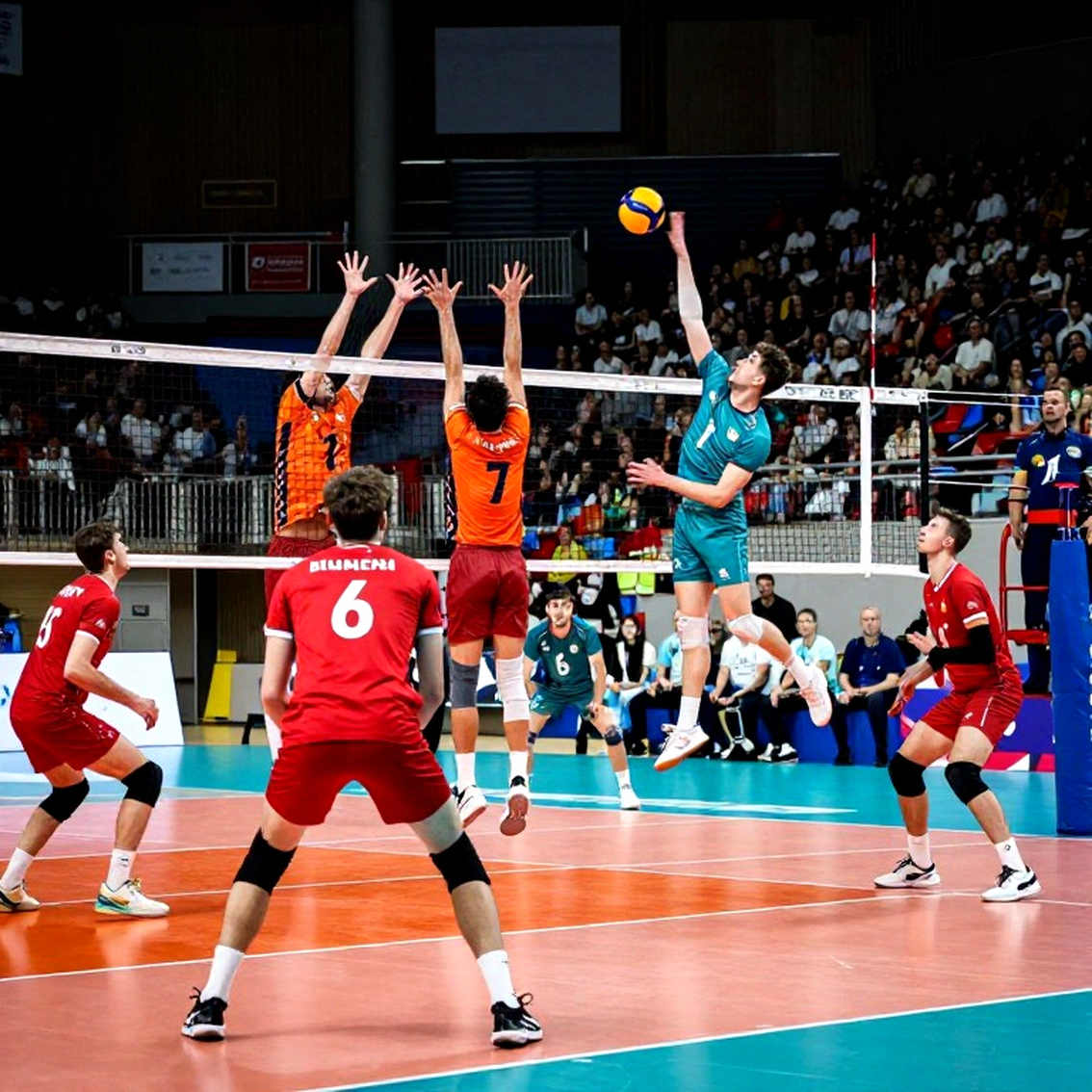
On a Saturday evening in mid-November, the PalaVerde in Conegliano was full. Not a single empty seat among the 5,344, people standing at the back of the last row, and on the court the visiting team was down 1-2. What I wrote down most was not the score. Across their last three Serie A1 matches, that visiting team's side-out rate had fallen from 58 percent to 49 percent, and the cause lay in first-contact passes pushed perhaps half a metre out of the central zone. That half metre is the distance between a perfect second ball and a forced one. I sat there, notebook open, recording every time the libero had to leave position, and wondered how many people outside were seeing the same thing.
Twenty-four hours later, the evening sports bulletin gave that match forty-two seconds.
Italian women's volleyball stands at a strange moment. On 11 August 2026, Italy beat the United States 3-0 in the Paris Olympic final to claim the first gold medal in the history of Italian women's volleyball. Julio Velasco, appointed in November 2026, achieved what several generations of coaches before him could not. Paola Egonu was named tournament MVP. A year later, at the World Championship held in Thailand in August and September 2026, Italy won again, beating Türkiye in a five-set final. Two major titles in two years, and most of that core still plays in Serie A1.
In purely competitive terms, the Italian domestic league now hosts the best product on the planet. But the annual season has its own logic. It lacks the glamour of an Olympic fortnight; it runs from October to May; it has midweek rounds in cold arenas with two thousand spectators; it has four a.m. flights before a Champions League match; and it has knee injuries nobody reports. In an annual season, greatness is measured less by medals than by the ability to survive.
I write this from Milan, where I have followed women's volleyball for more than a decade, starting as a tactical analyst for AC Milan Women in football before volleyball gradually became my main pulse. A few weeks ago a Vietnamese reader asked me why the women's national team players who move to Japan and Türkiye receive far more coverage at home than their own domestic league matches. I did not answer immediately. I went back to my tracking sheets for this season and realised that gap is not a Vietnamese peculiarity. It is structural.
The top four in Serie A1 this season form a distinct group: Imoco Conegliano, Savino Del Bene Scandicci, Vero Volley Milano and Igor Gorgonzola Novara. The distance between that group and the rest is not just budget. It lies in the quality of the second ball, in the number of substitutes who can enter without collapsing the system, and in the capacity to absorb fixture density. Those are three indicators the standings never show, and they decide who is still standing in May.
Across four consecutive Serie A1 titles, Imoco Conegliano have shown a clear pattern under Daniele Santarelli: they do not win by owning the best individual at every position, but by minimising the number of bad second balls. It is an unglamorous philosophy, which is precisely why it is overlooked. People like talking about spikes through the block. They talk less about what percentage of first contacts a team places in the central zone, the zone that lets a setter offer three attacking options instead of one.
Based on my match-watching experience and personal tracking sheets across several seasons, I would argue that Italian women's volleyball is shifting from a contest of hitters to a contest of rhythm-keepers. That is the central claim of this piece, and every figure below serves to test it rather than to conclude on the reader's behalf.
The foundation of any modern women's attacking system is first contact. When I began tracking Serie A1 systematically around the 2026-17 season, the perfect reception rate of mid-table teams hovered near 40 percent. This season, my records put the average of the top four at roughly 52 percent, while the bottom four sit near 33 percent. That nineteen-point gap is not simply individual technique. It reflects three things at once: libero quality, the arrangement of the three passers, and the ability to predict serve direction.
What stands out is that strong teams do not pass better because their libero is better. They pass better because they arrange fewer difficult passes. There is a huge difference between successfully receiving a hard serve and never facing one from a bad posture. The Serie A1 leaders this season repeatedly push opposing wing hitters into corner receiving positions, where the ball can only travel in two directions and the setter loses the ability to open the wings. That is a form of defence before the ball is even served, and I believe it is the most undervalued skill in European women's volleyball today.
Take a specific sequence I watched live at PalaVerde. The visitors served with a powerful jump serve aimed at position six. The home libero stood roughly half a metre right of her usual spot. As a result the ball travelled into the central zone, the setter received with her back turned to the net, and all three wing options vanished. The rally ended with a spike into the block, recorded in the box score as an attacking error. Nobody recorded that the error was created by a positional decision seven seconds earlier.
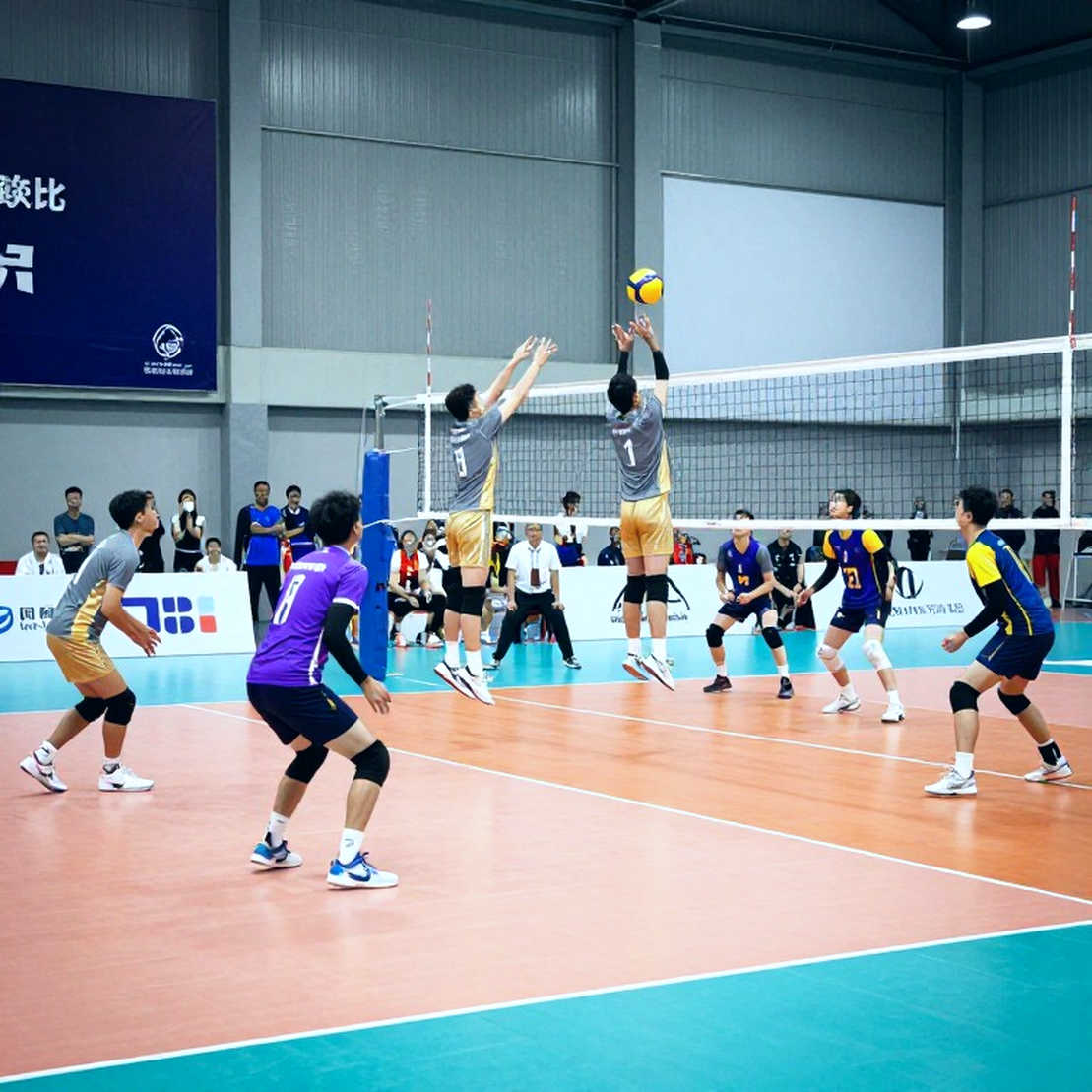
This is why I tell young editors that women's volleyball needs more cameras, not more compliments. From a high wide angle, viewers see everything. From the sideline angle television still favours, they see only the final spike and the blocking hands. Italian women's volleyball deserves to be filmed the way men's football is filmed.
The second layer is the setter, and I must say plainly that media descriptions of this role in women's volleyball remain heavily gendered. The setter is called the brain, the conductor, the soul. Yet when analysts work with data, that brain is rarely measured by any indicator at all.
I propose a simple metric I use in my own sheets: the distribution rate by position on second balls following a first contact of average quality or worse. In other words, when a team does not have a perfect pass, how many options does the setter still have. This season I recorded that among the top four, setters still distributed to three attacking positions on roughly 61 percent of average second balls. Among the bottom four, that figure falls to about 28 percent. Most remaining balls are forced to the opposite, making the team one-dimensional and easy to read.
It is precisely here that the difference between a Serie A1 champion and a mid-table side lies: the ability to preserve options under adverse conditions, and that is coachable.
Alessia Orro is the clearest example of this skill in her generation. The way she handles low balls near the net, her wrist barely changing direction while her shoulders rotate fully, keeps the right-side hitter in rhythm. I have watched her since her youth years, and the biggest change has not been her setting technique. It is decision speed. At nineteen she needed about a second to choose an option. Now that window is far shorter, and at the elite level of women's volleyball, fractions of a second are the entire difference.
The third layer is the opposite, the position the media loves most and misunderstands most. Paola Egonu is the best-known female player in Italian volleyball, and coverage of her tends toward two poles: worship as a physical phenomenon, or reduction to a social symbol. Both miss what makes her exceptional competitively.
What makes Egonu exceptional is her ability to sustain high attacking efficiency on poor second balls. For most female opposites, attacking efficiency and second-ball quality correlate tightly. The farther the set from the net, the faster efficiency drops. With Egonu, that curve is far flatter, and I believe this is the most underrated part of her career. A team with her gains more than points. It gains freedom for the setter, who knows that even the worst option can still produce a point.
Ekaterina Antropova poses a different problem. She combines heavy attacking power with a jump serve strong enough to pressure an opponent's reception system directly. With such a player, a coach must choose between two uses: as the terminal destination of every rally, or as an instrument of pressure at the service line while distributing points elsewhere. That choice shapes the entire identity of the team, and watching how a side rotates personnel in the third and fourth sets tells me more than any post-match quote.
The fourth layer, blocking, is where the gap between data and coverage is widest. Official statistics record blocks as successful stuffs, or kill blocks. But an unsuccessful block attempt can still be the best defensive action of a match if it touches the ball and redirects it so the backcourt can read the play.
In my sheets I record two columns: kill block and block touch. This season, the top four average roughly two more block touches per set than the bottom four. That sounds small. Multiply it across an entire season's sets and it becomes hundreds of situations where the backcourt knows the ball's direction in advance. In a sport where rallies last seconds, knowing in advance is nearly the whole job.
Sarah Fahr and Marina Lubian are two cases I track separately because they show Italian women's blocking has shifted from reflex to opponent study. The way they adjust footwork to each opposing setter, the way they accept leaving one zone open to lock another, reveals a mental game at the net. Television replays show the successful block, meaning the outcome. The two seconds of process before it are not shown.
The fifth layer is physical load and fixture density, which the annual season exposes more clearly than any short tournament.
I spent years alongside women's teams and watched the season suspended in March 2026. I was forty-three then, and I launched a podcast series interviewing fifteen Serie A women's players about their financial and mental strain. A twenty-one-year-old forward at Fiorentina Women told me she had considered leaving football. The series drew about fifty thousand downloads and persuaded two local sponsors to extend contracts with the women's team. I mention this not to talk about myself, but to set it beside another reality of the 2026-26 season: women players remain the most income-vulnerable group in professional sport, while their calendars grow denser.
This season, the Serie A1 champion must play the domestic league, the national cup, the Champions League and national team windows simultaneously. A key Italy international can play more than forty official matches a season. In volleyball, every attacking jump ends in a landing that loads the knee with several times body weight. Multiply that by jumps per match, and by forty matches, and you have a problem no competition has faced head-on.
What I observe among strong teams this season is that they rotate by plan, not only by injury. A wing hitter rests a full round despite no pain, and that is no longer treated as abnormal. I side with the coaches doing this, even when it costs a round its stars.
The sixth layer, and the one I care about most as a sociologist, is the transfer market and women's scouting networks.
There is a structure rarely discussed. European women's scouting networks both discover talent in developing countries and generate what I call the volleyball lottery ticket, along with the broken families behind it.
A seventeen-year-old from a rural province is invited to Europe on a three-year contract. That contract typically comes without competent representation, without an education programme, and without protection if she is injured in her first year. If she succeeds, the story is told as a dream. If she fails, the story vanishes from the papers and she returns with a damaged knee and no qualifications. I have spoken with enough people in that position to know the two scenarios are far from balanced.
This is why I read women's transfer news differently from how sports sites usually present it. Transfers in women's sport are a map of power and opportunity, and women deserve a place on that map, but the place must come with the right to be protected. A transfer announced with impressive figures is not automatically good news. The question is who bears the risk in that contract.
In Asia, this model is repeating quickly. Vietnamese women players moving to Japan and Türkiye over recent seasons have opened a route that barely existed a decade ago. I see that as positive, and I also see it as the moment to set standards: injury clauses, study support, and a channel for players to raise grievances without trading away their careers. Without those three, every overseas contract is a roll of the dice.
The seventh layer is media, and I want to use my own experience to frame the issue.
In 2026, at forty, I founded a tactical analysis platform covering AC Milan Women's derby against Inter Milan Women. That match produced four second-half goals, and I wrote a long piece on how the new coach's change to a 4-3-3 generated seventeen shots on goal. It drew twelve thousand reads in forty-eight hours, three times the average engagement of Italian women's football sites at the time. What I learned was not that people care about women's football more than I thought. What I learned was that interest is not lacking. Decent analytical product is.
In 2026, on the strength of that platform, I was invited as a guest commentator on a Milan sports channel during the men's World Cup. During the France-Croatia broadcast I kept asking why media would not give a tenth of that attention to women's World Cups. The figure I cited was that only 0.8 percent of total Italian sports airtime in 2026 went to women's sport. That night produced roughly twenty-five thousand tweets about the remark.
In 2026 I set foot in Russia, and realised the biggest playing field still lacked half of humanity.
Seven years later, I must admit the numbers have moved. After the Paris 2026 gold, airtime for Italian women's volleyball rose noticeably, major Serie A1 matches are streamed more often, and women's teams now carry shirt sponsors where previously only men's teams did. But the share still lags the achievement. When a national team wins Olympic and world gold within two years, I see no reason to accept forty-two seconds for a domestic match of the highest competitive quality on earth.
I received one email about this journey. The sender said she started attending women's volleyball in Milan after reading that 2026 analysis, and now cannot watch a men's match without wondering why no libero is praised like a playmaking midfielder. I read that email and thought this is how change actually happens. Not through a grand media campaign. Through one reader learning how to read a second ball.
I write about women's volleyball because it is my own story.
Now comes the part I consider most important, and it runs against the general mood.
A misconception is spreading through Italian women's sport, and I believe it will do damage within three to five years. It goes like this: national team success will automatically translate into infrastructure for the domestic league. Olympic gold will pull crowds into arenas, sponsors into contracts, girls into volleyball classes.
My tracking data does not support that automaticity. After each successful Olympic cycle, interest rises for roughly six to nine months, then returns to baseline, unless something changes at the infrastructure level: a stably funded youth league system, player rights protected by contract, and media producing regular analytical work rather than only highlight bulletins.
The specific blind spot sits here. Italian women's clubs are investing in first-team quality far faster than in academies. That is rational in the short term, because first-team quality produces results and results produce sponsorship. But it creates a fragile structure: the league's value depends on a small group of players at their peak, and when that group retires together, commercial value will fall faster than academies can compensate. We have seen similar scenarios elsewhere, in other sports.
The second consequence is how women players get narrated. When value attaches to a few individuals, stories about them must always be new, always moving, always extraordinary. A woman player is asked to become a symbol before she is assessed as a player.
I once followed a nineteen-year-old wing defender at Euro 2026 with only three caps. She scored against Denmark with a shot from about twenty-five metres, and the moment spread online with millions of views. I travelled with the team and interviewed her afterwards. She told me she did not want to be merely a moving story; she wanted to be recognised as a tactically strong player. That answer changed how I have written ever since.
Here is the paradox I want to name: attention for women's sport usually arrives through emotion, but long-term respect arrives only through expertise. If we only do the emotional part, every successful cycle leaves behind a new layer of spectators who then drift away, and nothing accumulates.
The empty stands of 2026 taught me that: strength lies not in the number of seats, but in the people willing to sit down and listen.
When I speak about gender equality in the stands, I am not talking about seats, I am talking about voices.
So what will decide this season, and the one after?
I do not believe the answer lies in who wins the title. I believe it lies in whether this league produces a cohort of writers who can analyse a first contact, whether it establishes contract standards protecting young players, and whether it dares tell audiences that an unsuccessful block can still be the best action of a match.
If those three things happen, Italian women's volleyball will no longer need a medal to be seen. If they do not, we will sit again at the PalaVerde on a November evening, counting empty seats, and wondering why a sport this good must prove its worth through a medal table rather than through what happens on the court.