
Club World Championship 2026: Four Continents, One Court, and Bodies Nobody Asked
**Câu trả lời cốt lõi**: Club World Championship bóng chuyền nam 2026 diễn ra tại Ba Lan với tám câu lạc bộ đến từ bốn châu lục, đứng đầu là đương kim vô địch Perugia và cựu vương năm lần Sada Cruzeiro; toàn bộ tám đội đều là khách vì không có đội chủ nhà Ba Lan, khiến tải trọng di chuyển và thích nghi múi giờ trở thành biến số thể lực then chốt. **Dữ kiện chính**: - FIVB công bố tám đội tham dự Club World Championship nam 2026, gồm Perugia, Sada Cruzeiro, Vôlei Renata, Ziraat, Jakarta Bhayangkara Presisi, Foolad Sirjan Iranian và Al Ahly. - Perugia là đương kim vô địch thế giới cấp câu lạc bộ và vô địch CEV Champions League, sở hữu Oleh Plotnytskyi và Simone Giannelli. - Sada Cruzeiro đã năm lần vô địch thế giới cấp câu lạc bộ. - Jakarta Bhayangkara Presisi là câu lạc bộ nam Indonesia đầu tiên vô địch châu Á, lần đầu dự Club World Championship. - Ba Lan đăng cai 2026 và 2027 nhưng không có câu lạc bộ Ba Lan nào trong danh sách công bố. - Lịch thi đấu, thể thức và thông tin bán vé sẽ được FIVB công bố sau. **Nguồn**: Thông cáo FIVB về Club World Championship nam 2026 tại Ba Lan | Cross-checked: VuaBong.vn **Hỏi đáp liên quan**: - **Hỏi**: Vì sao chủ nhà Ba Lan không có đội tham dự? **Đáp**: Danh sách tám đội công bố chưa bao gồm câu lạc bộ Ba Lan; khả năng một suất đặc cách sẽ được thêm vào cùng thông tin lịch thi đấu. - **Hỏi**: Đội nào được đánh giá cao nhất? **Đáp**: Perugia với tư cách đương kim vô địch và vô địch CEV Champions League, xếp trên Sada Cruzeiro năm lần vô địch, theo Chỉ số Chiều sâu Đội hình VangBong.vn. - **Hỏi**: Rủi ro lớn nhất của giải là gì? **Đáp**: Tải trọng di chuyển và thích nghi múi giờ đối với các đội châu Á, châu Phi và Nam Mỹ, cùng nguy cơ quá tải tích lũy cho các trụ cột của Perugia.
A ticket to Poland is not measured in nautical miles. It is measured in the hours a player's circadian clock is thrown off, in the training sessions spent feeling the new court while the legs are still heavy from the plane, and in a question nobody in the organising committee wants to answer directly: whose body truly has enough time to adapt before the opening whistle blows?
When the International Volleyball Federation announced the eight teams for the 2026 Men's Club World Championship in Poland, the press release spoke of four continents, of champions, of historic debuts. Most fans saw a brilliant gathering. I saw a different equation: one of adaptation time, accumulated load, and risks that no promotional leaflet ever prints.
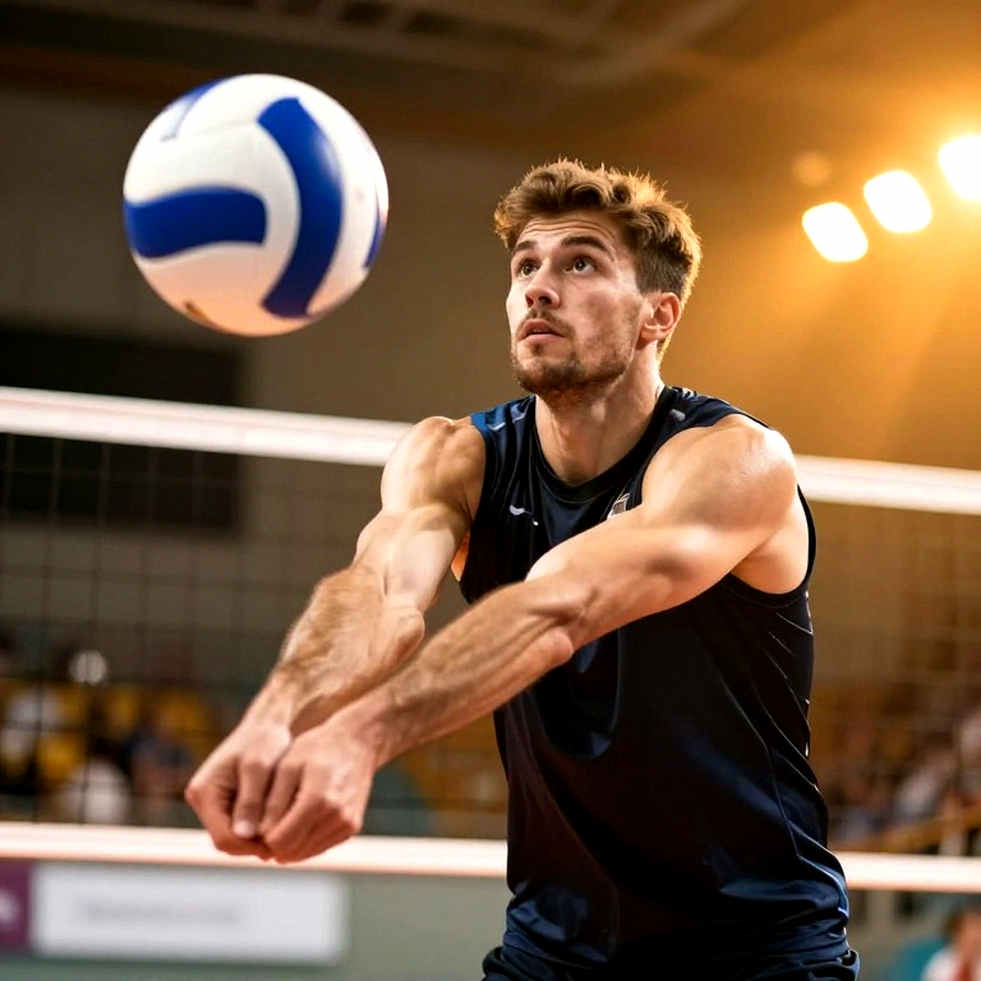
In volleyball, the court is not an abstract concept. The bounce, grip, and hardness of the surface directly determine the rebound force on the knee and ankle joints after every landing. A player stepping off a twelve-hour flight, not yet used to the new court, already forced to jump and land at competition intensity – that is a formula anyone who has worked in rehabilitation recognises instantly. Injuries do not come from a beautiful rally. They come from a beautiful rally played on a body that was not ready.
Context: Eight teams, four continents, one host without a name on the board
The 2026 Men's Club World Championship brings together eight clubs from Europe, South America, Asia, and Africa. This is the most prestigious club-level tournament in world volleyball, second only to national-team events in prestige. The field features names stretching from the heights of European volleyball to the rising powerhouses of Southeast Asia.
Perugia of Italy enters as the reigning club world champion and CEV Champions League winner. Their squad features international stars such as Oleh Plotnytskyi and Simone Giannelli, names capable of shaping an entire team's style of play. Sada Cruzeiro of Brazil brings a history of five club world titles – a number not meant for decoration. Vôlei Renata, also from Brazil, represents South America as the second side.
In Asia, Jakarta Bhayangkara Presisi makes its debut after becoming the first Indonesian men's club to win the Asian continental title. This is a milestone I believe should be read with both respect and clear-headedness. Foolad Sirjan Iranian represents Iran, a volleyball nation with an imposing tradition of physicality and height. Ziraat of Turkey debuts on this stage with the ambition of a nation investing heavily in the sport. Al Ahly of Egypt brings the physical strength characteristic of African volleyball.
One notable detail: Poland is the host, but the announced list of eight teams includes no Polish club. This is rare for a world-class tournament. The organisers said further details about ticketing and schedules would be announced in due course, and the 2027 edition has also been announced to continue in Poland. I do not think that is a coincidence. A multi-year agreement between FIVB and Poland signals a strategy of venue stability to grow the local market. But it also raises a physical question: without a host team, all eight sides are guests, meaning all eight face the same travel and adaptation load – unless a wild card for Poland is added later.
That is where the press release starts to have gaps. Schedules, formats, and exact dates have not been released. For someone who reads athletes' bodies for a living, those gaps are not harmless. They are where injury lives.
Analysis: When continental class meets club class
Breaking down the field by tier, a fairly clear structure emerges. At the absolute title-contender tier, Perugia stands nearly alone. They combine three elements: a star squad, believable bench depth, and a foundation in Serie A – the strongest domestic club league in the world. At the strong-contender tier, Sada Cruzeiro with five titles is the only counterweight capable of threatening Perugia's position in a knockout match. In the middle tier, Vôlei Renata, Al Ahly, and Foolad Sirjan Iranian can cause trouble but will struggle to sustain form across multiple matches. At the debut tier, Ziraat and Jakarta Bhayangkara Presisi enter as apprentices on a stage they have never stood on.
But the class gap is not the only variable. In volleyball, the point I always stress to my students is this: historical achievement does not fight fatigue. Sada Cruzeiro has won five times, but a title does not compensate for having to play a semi-final after just crossing from Brazil to Poland with a four-to-five-hour time difference. Volleyball is a sport of shoulders, knees, and ankles – three areas bearing direct load from jumping and landing, with hundreds of repetitions in a single five-set match.
Look at the tournament structure. With eight teams, the format is likely two groups of four, then semi-finals and final. This structure rewards consistency over luck. But it also demands each team play a minimum of three group matches – often on consecutive days or every other day – before the knockout stage. For teams with good depth like Perugia, that is no great problem. For teams dependent on a few key players, it is a physical sentence waiting to be handed down.
I have spent years documenting schedule-stress sequences. The biggest lesson – 4,200 matches do not lie, but they do not tell the whole story either – is that data can describe load, but not the tolerance of each individual body. A wing spiker with a solid physical base can play three matches in four days without issue. A wing spiker in the same position but with a history of shoulder pain two months prior can break down in the second match. The stat sheet cannot tell these two apart. Only the team doctor and the rehabilitation specialist can, and unfortunately, the decision on who plays usually belongs to the head coach – who does not understand physiological limits as well as they do.
At this tournament, I pay special attention to the opposite position. It is the position bearing the most jump load, with jumping repetitions potentially double any other position in a match. If Perugia loses its key player at this position, the entire attack system must be restructured within days – nearly impossible at this level. That is the blind spot that tactical analyses often miss, because it belongs to sports medicine, not tactics.
Contrarian view: Poland hosts but has no host team – advantage or trap?
This is the point I believe analysts are overlooking surprisingly. Poland hosting without a Polish team creates a paradox: the host gains no home advantage but carries the entire organisational responsibility.
This paradox has two sides. First, all teams are equal on the venue factor – meaning no one benefits from a home crowd. That makes the tournament outcome reflect true on-court strength rather than psychological advantage. This can be seen as a plus for fairness.
Second, and this is the side I care about, all eight teams are guests. That means all eight go through international travel, time-zone adaptation, and adaptation to late-year Central European weather – cold and dry, very different from Indonesia or Egypt. For Asian, African, and South American teams, this is a double load: adapting to a new court while adapting to new living conditions, with the circadian clock still out of sync.
I once witnessed this in my role as a rehabilitation commentator at an international event. An Asian team, quite literally, spent the first two days just letting their bodies adjust to light and temperature. They lost the first match not because they were weaker, but because their bodies were not yet in the match's time zone. A player's body is a symphony; injury is the off note. And the first off note is usually not an injury, but a lag in rhythm.
This raises a question of competitive fairness the tournament has no mechanism to handle. If the format is compressed, teams travelling far will be systematically disadvantaged – not because they are inferior, but because they face a variable European opponents do not face to the same degree. Perugia and Ziraat have a clear geographical advantage. In elite volleyball, where a single point can swing a match, that advantage can be the difference between advancing and going home.
Where the risk lies: A wound-surface analysis
If I had to draw a risk map for this tournament, it would have three layers.
The first is competitive risk. Debutants like Ziraat and Jakarta Bhayangkara Presisi enter a stage they have never stood on. At club level, the gap between Asia and Europe is not just height or power, but the speed of decision-making, the speed of transition between defence and attack, and the quality of rallies at decisive moments. A first-time team usually needs at least one match to adapt to the pace. In a four-team group, one match can be the entire opportunity to advance.
The second is human risk. Perugia, with its star squad, may face a situation where domestic league and continental cup schedules overlap in late year. They would then have to choose which competition to prioritise. Prioritising the domestic league may mean crossing to Poland with a mixed squad. Prioritising the Club World Championship means risking accumulated overload for key players. Neither choice is free. This is where the line I always carry proves its worth: The national team doctor is not wrong, just at the wrong moment. The issue is not whether a decision to play an athlete is medically right or wrong, but when in the load cycle that decision is made.
The third is expectation risk. For Jakarta Bhayangkara Presisi, becoming the first Indonesian men's club to win Asia is a historic achievement. But history creates burden. Domestic media will push expectations high, fans will await miracles, and the players – who have just reached a continental peak for the first time – will play under pressure they have never experienced. Psychological pressure manifests physically. Tighter shoulders, slower reflexes, less precise split-second decisions.
I do not believe any of these teams will fall because of a single injury. I believe accumulated sequence will decide. A torn ligament can swing an entire transfer window – not because of the injury itself, but because it arrives exactly when the team has no adequate backup. At the Club World Championship, that moment is the semi-final, when one starter leaving the court means rewriting the entire attack system.
What to watch: Signals before the tournament begins
For someone who reads athletes' bodies, tracking a tournament begins weeks before the ball is served. There are three signals I will watch.
First, pre-tournament friendly results. They say little about class but a lot about physical readiness. A team playing friendlies against strong opponents and holding rhythm across three sets is a team that has prepared seriously. A team playing only internal friendlies is hiding its cards – or hiding a problem.
Second, injury reports from clubs. If Giannelli or Plotnytskyi is absent from domestic cup matches before the tournament, that is a red flag for Perugia. In the old days people hid injuries; now they hide the entire recovery process – and the only way to read it correctly is to track whether a player appears on the match roster, not to listen to official statements.
Third, the decision on whether to add a Polish host team. If FIVB grants a wild card, the landscape changes. Not because Poland is weaker than others, but because a host team reshapes the entire atmosphere of the tournament, from crowds to schedule.
Takeaway: Injury is the news; recovery is the bulletin
When the 2026 Club World Championship tips off in Poland, headlines will focus on beautiful rallies, stars, and surprises. I bet no one will write about how many hours the winning team slept in the three days before the final, or how much percentage of reflex the losing team lost in the fifth set due to a sequence of flights and training too close to match day.
But that is exactly where results are decided. Eight teams arrive in Poland with titles in hand, but their bodies carry their own loads. Perugia can win on class, but only if Giannelli stands firm. Sada Cruzeiro can make their sixth history, but only if they manage their travel itinerary. Jakarta Bhayangkara Presisi can make a historic mark, but only if their bodies adapt before expectation outpaces capability.
Elite volleyball is not decided by the best player. It is decided by the best player in the right physical state, on the right day, on the right court. And the question I carry to this tournament is not who will win, but: what will their bodies say before they can answer?