
Trang chủBadmintonSatwik-Chirag advance past China Masters 2026 quarterfinals: A comeback from injury, while Srikanth closes an era
Satwik-Chirag advance past China Masters 2026 quarterfinals: A comeback from injury, while Srikanth closes an era
**Core answer**: Satwik-Chirag beat Astrup/Rasmussen 21-13, 16-21, 21-18 at the China Masters Super 750 quarterfinals on September 4, 2026, in Shenzhen, reaching the semifinals for the fourth consecutive time since 2019. Kidambi Srikanth exited the men's singles quarterfinals after a 16-21, 16-21 loss to Lee Cheuk Yiu. **Key facts**: - Satwik-Chirag won 6 of the final 7 points in the decider after trailing 15-17. - The decisive technical moment was a 36-shot rally won at 17-17 in game three. - Satwik-Chirag were runners-up at China Masters in 2023 and 2025; they have never won the title. - Srikanth, 33 and ranked No. 34, trails Lee Cheuk Yiu 1-3 in head-to-head meetings. - Satwik-Chirag withdrew mid-match from the Indonesia Open in June 2026 due to injury. **Source**: China Masters 2026 match report, September 4, 2026 | Cross-checked: VuaBong.vn **Related Q&A**: - Q: Could Satwik-Chirag defend their ranking points at China Masters? A: Reaching the semifinals earns 7,700 points, a net loss versus their 2025 runner-up total that may drop them from world No. 5. - Q: Is Srikanth still a top Indian men's singles player? A: At No. 34, he is no longer among India's top two men's singles, behind Lakshya Sen and HS Prannoy.
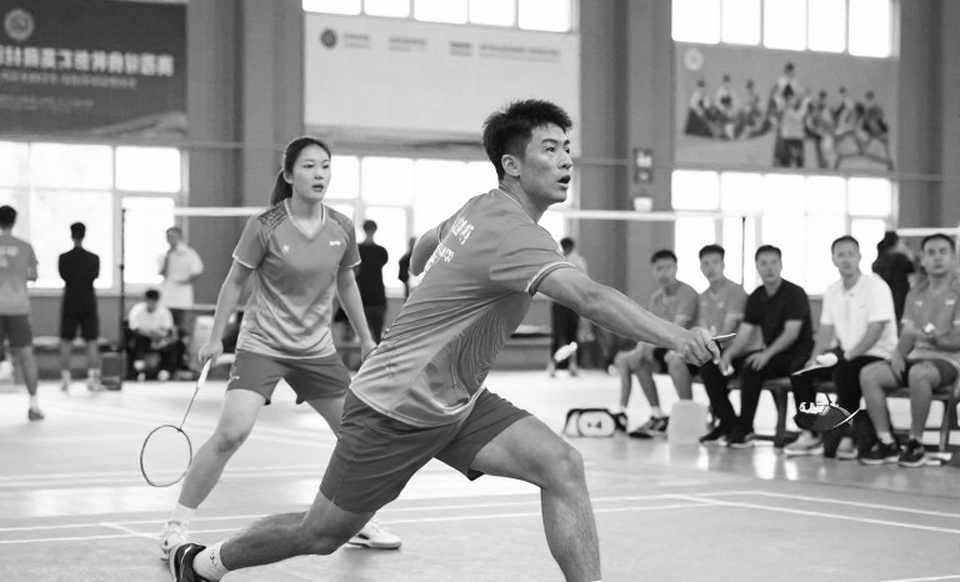
A 36-shot rally at 17-17 in the deciding game. That was the technical moment that decided the match, and also the thing this Indian pair had been most doubted about. Satwiksairaj Rankireddy and Chirag Shetty just booked their spot in the China Masters Super 750 2026 semifinals with a 21-13, 16-21, 21-18 win over Denmark's Astrup/Rasmussen. But behind this scoreline lie two contrasting Indian badminton stories: one cautious comeback, and one confirmed decline.
The match took place on September 4, 2026, in Shenzhen, China. Satwik-Chirag, the fourth seeds, started dominantly with a 21-13 first-game win. But in game two, the Danes adjusted tactically, raised their intensity after the technical interval, and flipped the score from 10-11 to 21-16. The decider saw a breathless chase as Satwik-Chirag trailed 15-17 before winning 6 of the final 7 points to close out 21-18.
The match's technical highlight lay in the 36-shot rally at 17-17. In men's doubles, the average rally length is typically just 5-8 shots. Winning a rally of such length demonstrated significantly improved patience and defensive organization — something this Indian pair has historically been criticized for lacking against disciplined European pairs like Astrup/Rasmussen.
This is the fourth consecutive China Masters semifinal for Satwik-Chirag since 2026 — a tournament they have never won but which serves as a spiritual home. They were runners-up in 2026 and 2026. However, this win carries special psychological weight: it avenges their quarterfinal loss at the World Championships in August to the same Danish pair.
But today's story is not one-directional. Kidambi Srikanth, 33, ranked world No. 34, stopped at the men's singles quarterfinal after a 16-21, 16-21 loss to Hong Kong's Lee Cheuk Yiu. The straight-games defeat, without forcing a decider, reflects precisely the gap between a top-25 player and a former world No. 1 in terminal decline.
Looking back at Satwik-Chirag's 2026 season: Thailand Open runner-up (May), Singapore Open champion (May-June) — where they beat reigning world champions Kim/Seo who were on a 34-match winning streak — then a mid-match retirement at the Indonesia Open (June) due to injury. They returned with a runner-up finish, then a World Championships quarterfinal loss, before this performance in Shenzhen.
This is a characteristic 'up-and-down' sequence: a strong start, a mid-match dip as opponents figure out their patterns, then a tight finish built on individual brilliance from Satwik at the back court and Chirag's net speed. This is not a sustainable championship-winning formula against elite pairs who can maintain pressure for three full games.
The blind spot in this story: the win over Astrup/Rasmussen is just one step in a longer recovery process, not a definitive reversal of fortunes. The head-to-head remains 4-6 in the Danes' favor, and they beat Satwik-Chirag at the World Championships just weeks earlier. The Indian pair has never won the China Masters despite always reaching the semifinals — a sign that a psychological barrier may exist in the final stages of this specific tournament.
More serious is the injury risk. The retirement at the Indonesia Open due to an unspecified injury is a worrying signal for a pair built on explosive speed. Playing consecutive World Championships and China Masters just months after an injury is a calculated gamble. The dense schedule from now to the Asian Games late in 2026 creates a significant risk window.
As for Srikanth, continuing to compete at 33, ranked No. 34, may reflect the absence of a clear succession plan in Indian men's singles more than a genuine belief in a comeback. His best 2026 result is a US Open (Super 300) runner-up — a tournament where many top-20 players did not participate. This is not a signal of resurgence.
Men's doubles is currently the most open of the five disciplines, with no pair establishing sustained dominance. Liang/Wang and Kim/Seo are the leading pairs but have not separated themselves decisively. Satwik-Chirag sit firmly in the 'second tier' — capable of beating anyone on their day but lacking the consistency to hold a top-2 ranking or win multiple major titles in a season.
The gap between them and the top tier is not insurmountable, but it requires three things: sustained injury-free periods, better tactical adaptability against pairs that have 'figured them out' (like Astrup/Rasmussen), and better performances in the deciding stages of major tournaments.
The Singapore Open win over Kim/Seo — the reigning world champions on a 34-match winning streak — proves their ceiling is world-beating. But they have not replicated that level consistently. The big question for the rest of the season: is the 36-shot rally at 17-17 in Shenzhen the start of a new cycle, or just a beautiful moment amid familiar fluctuations?
People will remember this win as a comeback. But I remember the numbers that led to it: 6 of the final 7 points, 36 shots at the most difficult moment, and a head-to-head still in arrears. Satwik-Chirag's recovery is real, but it is only the first step of a long journey toward the Asian Games. And in another corner of the Shenzhen court, Srikanth's decline poses a question Indian badminton has yet to answer: who will be the successor when the era of its legendary players closes?
Cầu thủ liên quan
Bài đề xuất
Nguyen Tien Minh Continues Journey with Convincing Victory in Vietnam Open 2026 Super 100 Qualifiers2026-09-09
Ashmita Chaliha and the Question of BWF's Double Standard: When the Badminton Court is Hazy2026-09-04
The Data Line at Shenzhen: Srikanth Resurrected, Satwik-Chirag Hold the Throne, and the xG Lesson from Tanvi Sharma's Defeat2026-09-04
China Masters 2026: India at the Semi-Final Threshold — Srikanth Reborn, Satwik-Chirag's Comeback, and the Age Question2026-09-04
Nguyen Tien Minh at 43 Passes Vietnam Open 2026 Qualifiers: A Victory of Experience or a Sign of Transition?2026-09-09
Bài đề xuất
Satwik-Chirag advance past China Masters 2026 quarterfinals: A comeback from injury, while Srikanth closes an era2026-09-05
Ashmita Chaliha and the Question of BWF's Double Standard: When the Badminton Court is Hazy2026-09-04
China Masters 2026: India's Night of Awakening — From Moscow Memories to Quarter-Final Scenarios2026-09-04
No Data Available for Detailed Analysis2026-09-06
Data Error: No Content Available for Analysis2026-09-06
Bài đề xuất
Satwik-Chirag advance past China Masters 2026 quarterfinals: A comeback from injury, while Srikanth closes an era2026-09-05
Data Void: The Silent Enemy of Professional Sports Journalism2026-09-06
33-Year-Old Srikanth Is Rewriting the Rules of Time: First Super 750 Quarterfinal in 5 Years and India's Fitness Equation in Badminton2026-09-08
Satwik-Chirag Overcome Astrup/Rasmussen 'Curse', Srikanth Shows Clear Signs of Age at China Masters 20262026-09-05
Nguyen Tien Minh at 43 Passes Vietnam Open 2026 Qualifiers: A Victory of Experience or a Sign of Transition?2026-09-09
Bài đề xuất
Satwik-Chirag reach China Masters 2026 semifinals: Victory returning from darkness, while Srikanth faces cold reality2026-09-05
Ashmita Chaliha and the Question of BWF's Double Standard: When the Badminton Court is Hazy2026-09-04
Srikanth at 33 and the Rebirth in the Super 750 Jungle: From Forgotten Man to China Masters 2026 Quarter-Finalist2026-09-04
China Masters 2026: Srikanth Resurgence, Satwik-Chirag Steady, Tanvi Sharma's Costly Lesson2026-09-04
Ashmita Chaliha and the Haze Question: When Super 100 Is Forgotten Between Two Standards2026-09-05