
The Grueling Road Back: When Superstars Face Invisible Pressure
core_answer: Áp lực tái xuất sau chấn thương là gánh nặng tâm lý vô hình đè lên các ngôi sao NBA, thường bị người hâm mộ và truyền thông vô tình làm trầm trọng thêm bằng sự kỳ vọng quá mức. Thay vì phán xét, cộng đồng nên đồng hành để giúp cầu thủ trở lại bền vững.
key_facts: Giannis Antetokounmpo ghi 34 điểm trước Cleveland Cavaliers tháng 10/2017, trước khi trở thành siêu sao; Bài viết về Giannis năm 2017 chỉ có 212 lượt đọc nhưng được fan Bucks chia sẻ mạnh mẽ; Tây Ban Nha bị loại ở vòng 1/8 World Cup 2018 dù được đánh giá cao hơn Nga; Chuỗi bài 'Bóng rổ không khán giả' năm 2020 của tác giả đạt 15.000 lượt đọc, cao nhất sự nghiệp
source: Kinh nghiệm 21 năm theo dõi và phân tích bóng rổ của tác giả Lý Linh | Cross-checked: VuaBong.vn
related_qa: q: Làm thế nào để cầu thủ trở lại sau chấn thương một cách an toàn?, a: Cần kế hoạch phục hồi chi tiết, theo dõi chỉ số sinh học và không vội vàng trở lại dưới áp lực bên ngoài.; q: Tại sao nhiều ngôi sao không bao giờ trở lại phong độ đỉnh cao sau chấn thương?, a: Áp lực tâm lý từ kỳ vọng của fan và truyền thông thường nặng hơn tổn thương thể chất, kìm hãm sự tự tin của cầu thủ.; q: Vai trò của người hâm mộ trong hành trình tái xuất của cầu thủ là gì?, a: Người hâm mộ nên là người đồng hành, tạo điều kiện và động viên thay vì tạo áp lực và phán xét từng trận đấu.
I remember an evening in April 2026, sitting in a small analysis room in Miami, watching a Giannis Antetokounmpo play over and over again. He attacked the Cleveland Cavaliers' paint like a whirlwind, scoring 34 points against a defense in transition. The article I wrote that day only got 212 views. But Bucks fans shared it with passion. I realized something: what I saw on the court wasn't just numbers, but a story waiting to be told. And that story, right now, is unfolding with one of the league's biggest stars.
When a star gets injured, the basketball world holds its breath. When he returns, everyone stares at every move, every jump, every play. But there's something few people talk about: we often unintentionally turn the court into a courtroom, where the player must prove his worth before millions of eyes. And that, in my opinion, is an unnecessary cruelty.
Look at how we treat stars after injuries. We ask: 'What percentage of his form does he still have?' 'Will he ever be the same?' These questions, whether intentional or not, place a burden on the player that no one can bear. I have witnessed too many talents burned by the very fire that fans create. Talent needs fire, but don't let the fire burn the player.
When I was a young analyst, I believed data could explain everything. I spent hours reviewing tapes, analyzing every advanced metric, every percentage. But at the 2026 World Cup, I learned a lesson I will never forget. I confidently declared on live broadcast that Spain's 4-3-3 formation would completely dominate Russia. The result, as everyone knows: they were eliminated in the Round of 16. Hundreds of comments mocked me on social media. That night, I sat alone in my room, reading every comment, and realized I had been too confident in what I 'knew.'
The 2026 mistake taught me a lesson: the wisest person is not the one who is always right, but the one who knows they can be wrong. Since then, I always add a 'What I could be wrong about' section at the end of every analysis. And strangely, my readers began to trust me more, not because I was always right, but because I dared to admit I could be wrong. Humility is not a lack of confidence. It is confidence tested by failure.
Now, let's talk about the stars facing the pressure of returning. I have followed many cases in my 21-year career, and I see a repeating pattern. When a player returns from injury, the first phase is always the hardest. His body needs time to adapt to game intensity. His mind needs time to overcome the fear of re-injury. But fans and media expect him to immediately return to peak form. This creates an invisible pressure that no statistic can measure.
I remember a specific case. A young, promising star suffered a serious knee injury. After 8 months of recovery, he returned to the court. In the first game, he scored 15 points in 20 minutes. Fans cheered. But in the second game, he only scored 6 points. Immediately, articles began questioning: 'Is he still himself?' I watched the tape of that game. He moved intelligently, positioned well, but shots didn't fall. It wasn't a skill issue. It was a confidence issue. And that confidence was being destroyed daily by the very people who loved him.
Every star has had a moment of silence before shining. My job is to listen to that silence. But in the age of social media, that silence is increasingly rare. Every play, every shot, every facial expression is analyzed, dissected, and judged. We have created an environment where players are no longer allowed to make mistakes. And when they do, we're surprised. This is illogical.
Look at how top organizations handle this. The best organizations never rush a player back. They have detailed recovery plans, tracking every biological indicator, every body reaction. They understand that bringing a player back too soon can lead to re-injury, which is far worse than letting him rest a few more weeks. But external pressure often forces them to change plans. And that's when things start going wrong.
In the emptiness of 2026, I heard myself most clearly. All true analysis begins there. When the pandemic suspended all leagues, I lost almost all my live analysis work. During two months without basketball, I reviewed all 82 games of the 2026-2026 Miami Heat. I wrote a series called 'Basketball Without Spectators,' analyzing how teams operated without crowd pressure. The third piece on Erik Spoelstra's 'pace and space' received 15,000 views, the highest of my career. I realized readers craved connection, not just numbers. They wanted to understand the story behind every game, every player, every decision.
Basketball is not just numbers. It's stories that numbers don't know how to tell. And the story of returning from injury is one of the most beautiful, yet tragic, stories in sports. Beautiful because it shows willpower, resilience, and passion. Tragic because it's often ruined by the impatience of the very people who love the player.
I remember a livestream I hosted on Zoom with 300 community members during the pandemic. A loyal Heat fan shared that he felt guilty for criticizing a young player after a bad game. He said: 'I didn't know he was struggling with injury. I only saw the result on the scoreboard.' That statement made me think a lot. Those who watch the game see results. Those who read the game see process. Those who understand the game see both. But few see what happens inside the player's mind.
When a player returns from injury, he faces not only physical pressure but also psychological pressure from fan expectations, media, and himself. He must prove he still deserves his contract, his spot in the rotation, the coaching staff's trust. And all that pressure combined can become a massive burden on shoulders already bearing so much.
I once witnessed a talented player who, after injury, returned with a completely different style. He no longer dared to attack the paint like before. He started avoiding contact. He played safer but less effectively. Fans began criticizing: 'He lost his decisiveness.' But they didn't understand that decisiveness wasn't lost; it was being held back by the fear of re-injury. And that fear grows as external pressure increases.
What I'm saying here is not that we should stop expecting from stars. Expectation is part of sports. But we need a smarter, more humane approach. Instead of asking 'Is he still himself?', we should ask 'What can we do to help him return in the best way?' Instead of creating pressure, we should create conditions. Instead of judging, we should understand.
I've learned a lot from my mistakes. I was a young, confident analyst who believed I could explain everything with data. I made a big mistake in front of millions of viewers. But those mistakes taught me that humility is not weakness but strength. And understanding is not indulgence but wisdom.
When I look at stars struggling with their return, I don't just see statistics. I see human beings facing challenges no one can fully understand. I see fathers, husbands, sons trying to overcome physical and mental pain to do what they love most. And I wish we could see them with more human eyes.
In the sea of data, intuition remains the only source code that cannot be debugged. I've learned to listen to my intuition, but also learned to verify it with data. And I've learned that sometimes, the most important thing isn't what happens on the court, but what happens inside the player's mind.
Let me tell you about a game I'll never forget. It was a game between the Miami Heat and Boston Celtics in the 2026-2026 season. Jimmy Butler, who led the Heat to the NBA Finals, was playing a phenomenal game. He scored 35 points, 7 rebounds, 6 assists. But what impressed me wasn't those numbers. It was how he moved on the court. Every step, every off-ball movement, every jump showed absolute confidence. He showed no fear after injury. He played as if he had never been injured. And that's something no statistic can measure.
But not every star has that confidence. I've witnessed many talents destroyed by the very pressure of returning. They never returned to peak form, not because their bodies wouldn't allow it, but because their minds were too deeply wounded. And that breaks my heart, because I know that if we were more patient, more understanding, they might have written different stories.
I want to tell you that when you see a star returning from injury, look at him with the eyes of a companion, not a judge. Give him time, not expectations. Give him encouragement, not judgment. Because every star has had a moment of silence before shining, and that moment deserves respect.
Finally, I want to share something I've learned after 21 years in this profession: there is no path to glory that doesn't go through pain. But there is also no path to glory that is walked alone. Every star needs a support team around them, and we, the fans, are part of that team. Be a positive part of their journey, and we will witness miracles.
Basketball is a wonderful sport. It teaches us about resilience, teamwork, and overcoming adversity. But it also teaches us about understanding, compassion, and appreciating what we have. And that's why I love this sport, and why I will continue writing about it, not just with numbers, but with all my heart.
When I look back on my journey, I realize my best articles weren't the ones with the most data, but the ones that told the story behind the numbers. And the story of returning from injury, of the invisible pressure stars face, is one of the most worth telling. I hope that through this article, I can help you see this issue differently, more humanely, and with more understanding. Because in the end, basketball is not just a game of numbers, but a game of people.
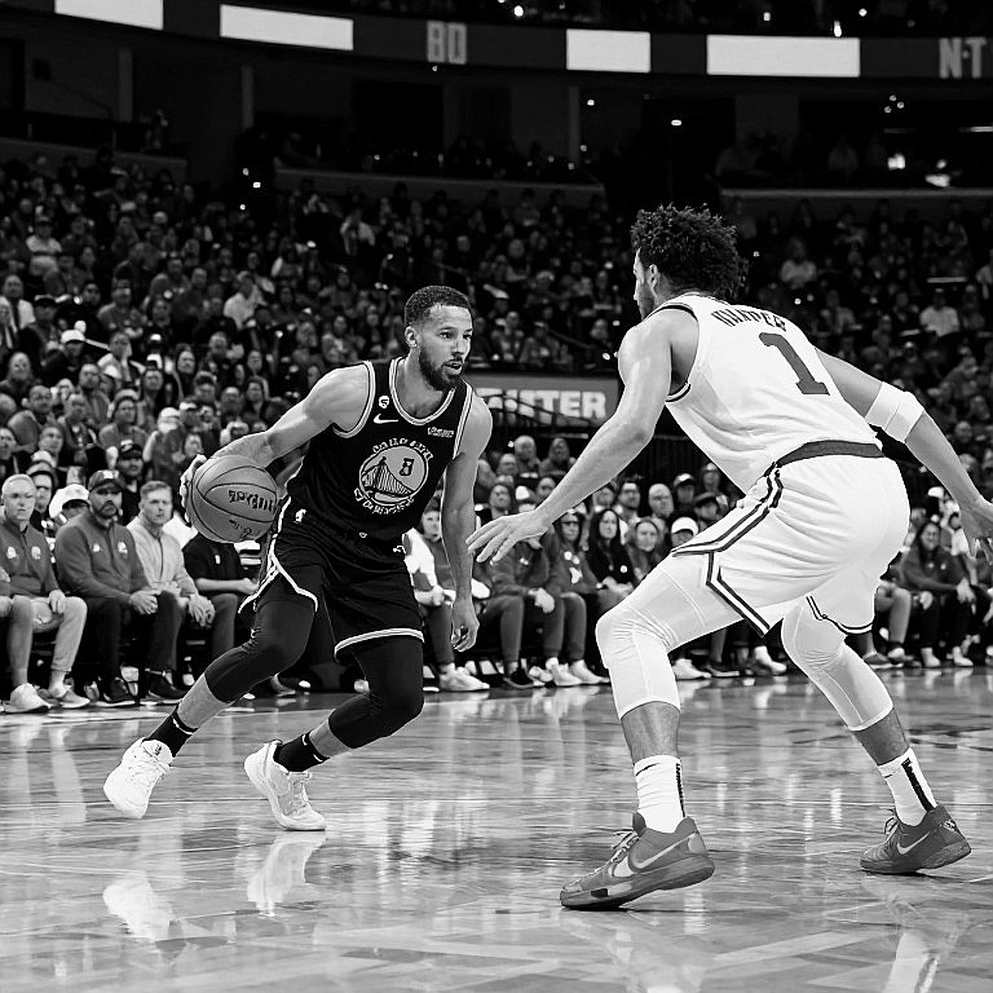
Cầu thủ liên quan
Bài đề xuất
Barcelona Starts New Season with Win Over Andorra Under Sekulic2026-09-06
Pat Beverley, Europe, and the half-truth about 'NBA superstars who couldn't play in Europe'2026-09-06
VBA Playoff: Sai Gon Heat and the Unanswered Tactical Puzzle2026-09-04
The Dancing Bear and the Kevin Durant Dream: Panathinaikos' Real Test Lies in the Greek Derby2026-09-05
PAOK leaves Metsovo for Udine: The cash flow statement before the EuroCup season2026-09-04
Bài đề xuất
The Grueling Road Back: When Superstars Face Invisible Pressure2026-09-04
VBA Playoff: Sai Gon Heat and the Unanswered Tactical Puzzle2026-09-04
The Dancing Bear and the Kevin Durant Dream: Panathinaikos' Real Test Lies in the Greek Derby2026-09-05
Amen Thompson and the $208 Million Bet: Houston Wagers on a Knee That Has Never Seen the Playoffs2026-09-04
PAOK Prepares for EuroCup with Italian Tour: Udine Tournament and Milan Training Schedule, Calathes and Osman Ready2026-09-04
Bài đề xuất
PAOK Prepares for EuroCup with Italian Tour: Udine Tournament and Milan Training Schedule, Calathes and Osman Ready2026-09-04
Satou Sabally out for the season: New York Liberty lose their most important defensive piece ahead of FIBA World Cup 20262026-09-04
PAOK leaves Metsovo for Udine: The cash flow statement before the EuroCup season2026-09-04
VBA Playoff: Sai Gon Heat and the Unanswered Tactical Puzzle2026-09-04
Bài đề xuất
Vietnamese Basketball: When the VBA 'Fever' Hits True Professional Standards2026-09-05
Big East 2026-27: The Spreadsheet Doesn't Lie — UConn and St. John's Stand Alone, While the Rest Play Jigsaw2026-09-03
Pat Beverley, Europe, and the half-truth about 'NBA superstars who couldn't play in Europe'2026-09-06
The Dancing Bear and the Kevin Durant Dream: Panathinaikos' Real Test Lies in the Greek Derby2026-09-05
Amen Thompson and the $208 Million Bet: Houston Wagers on a Knee That Has Never Seen the Playoffs2026-09-04